
Start with the system curve
The correct fan is selected at the intersection of required airflow and system resistance. Free-air volume is not enough because ducts, filters, dampers, louvers and equipment all add pressure loss.
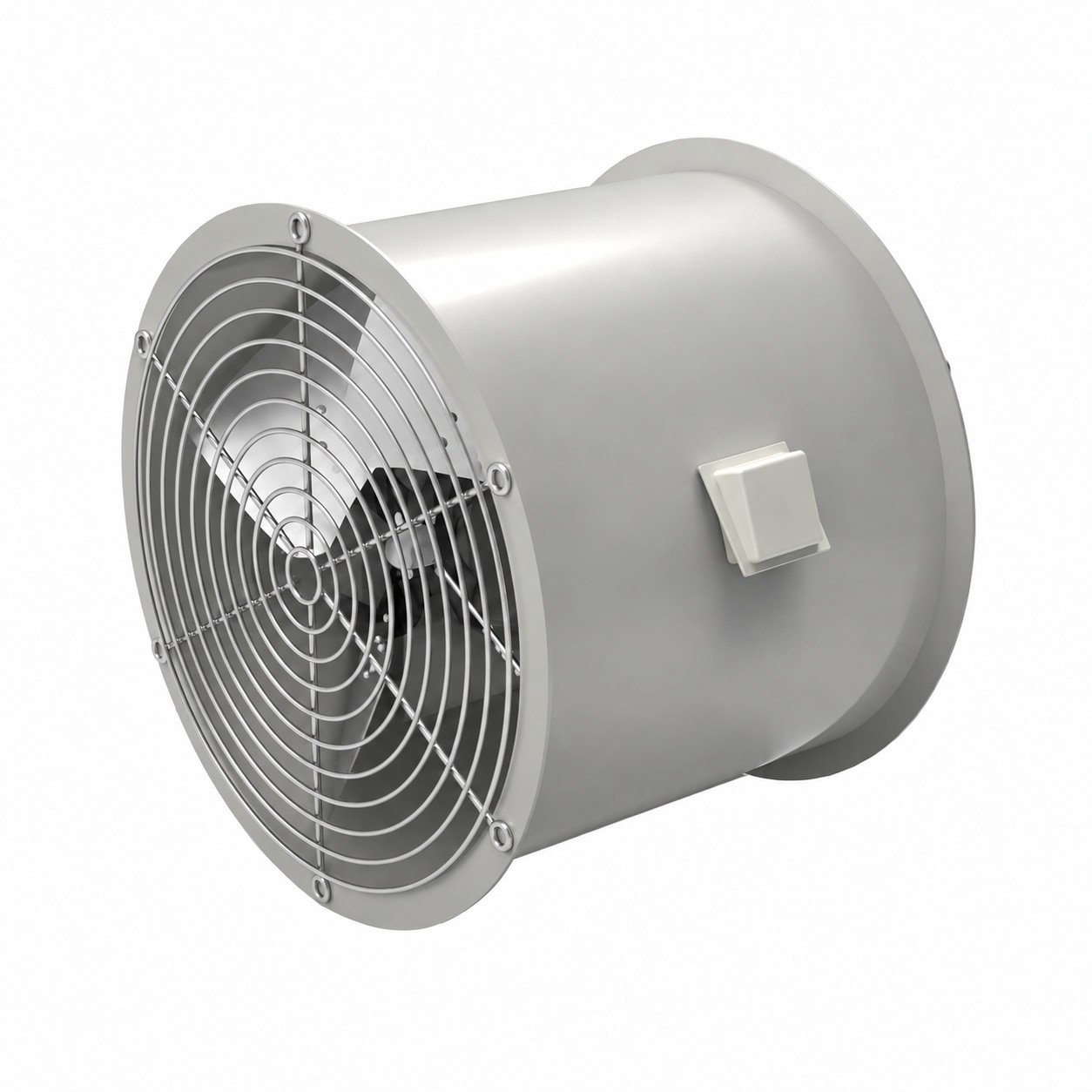
An axial fan is often a good fit for high airflow at relatively low pressure. A centrifugal fan is commonly used when the system requires more pressure or includes longer and more restrictive ductwork.
Compare the practical differences
Axial fans move air generally parallel to the shaft and can provide a compact installation. Centrifugal fans turn the airflow through an impeller and casing, offering a broad range of pressure capabilities and wheel designs.
- Required airflow and external static pressure
- Available installation space and duct orientation
- Noise limit and control method
- Gas temperature, dust and corrosiveness
- Efficiency at the intended operating point
Information to send with an inquiry
Provide design airflow, static or total pressure, air temperature, gas composition, altitude, power supply, installation position, duty hours and any required certification. A duct sketch or equipment schedule makes selection faster and more reliable.
Need help matching the fan?
Share airflow, pressure, medium, temperature and installation conditions for the next technical step.
Send an enquiry