
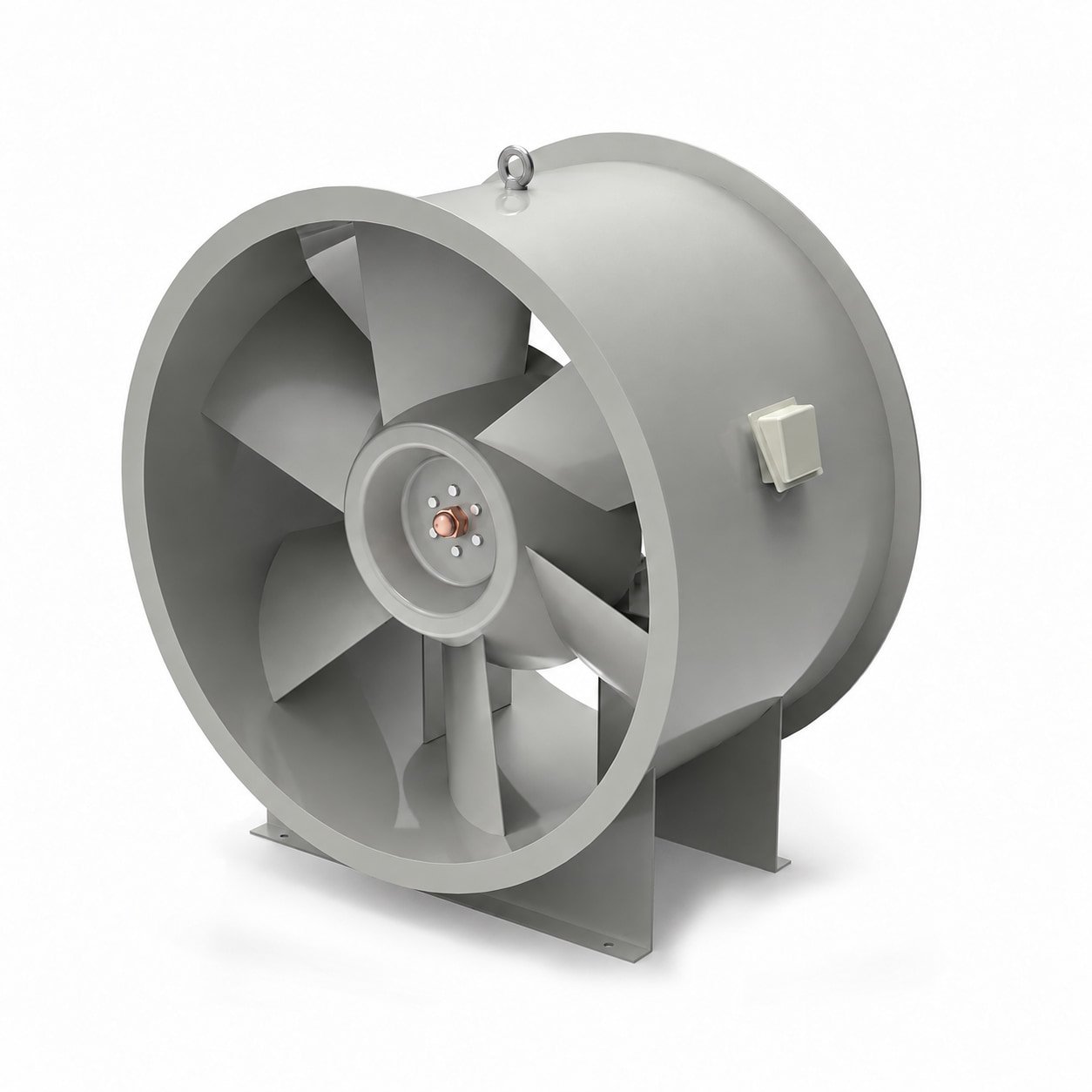
Axial fans should not be compared by diameter and motor power alone. Blade profile, blade count, pitch angle, hub ratio and tip clearance all affect airflow, pressure, efficiency, sound and the stable operating range.
Fixed-pitch blades suit duties that do not change much. Adjustable blades make it easier to tune a fan to a defined operating point. Aerofoil sections can improve efficiency and sound performance, but the actual curve still matters more than the label.
Blade profile
Flat or simply curved blades are used in many general ventilation products. Aerofoil blades use a fuller aerodynamic section. Twisted blades can keep the local angle closer to the intended value along the blade radius.
None of these descriptions proves performance by itself. Speed, diameter, hub and casing geometry change the result.
Fixed and adjustable pitch
Fixed-pitch impellers are simple to manufacture and maintain. A shutdown-adjustable blade can alter airflow and pressure within a defined range, provided the pitch is set correctly, locked and rechecked for balance. Pitch adjustment is not a substitute for selecting the right fan size.
Hub ratio and tip clearance
The hub ratio changes the active blade area and pressure capability. Excessive tip clearance increases leakage and can reduce efficiency. Very tight clearance requires better control of manufacturing tolerance, installation and thermal growth.
Gas conditions
Dust, corrosion and heat affect blade material, coating, strength and cleaning access. Hazardous-area work may also require review of material combinations, possible rubbing and the electrical specification.
Data to request
- Blade profile, count and pitch
- Hub and tip-clearance arrangement
- Duty point, speed, efficiency and sound data
- Material, coating and balance requirements
- Temperature, dust, corrosion and hazardous-area limits
Related products: T35 Axial Fan, JSF Low-Noise Axial Fan and JSF High-Airflow Axial Fan.
Need help matching the fan?
Share airflow, pressure, medium, temperature and installation conditions for the next technical step.
Send an enquiry