
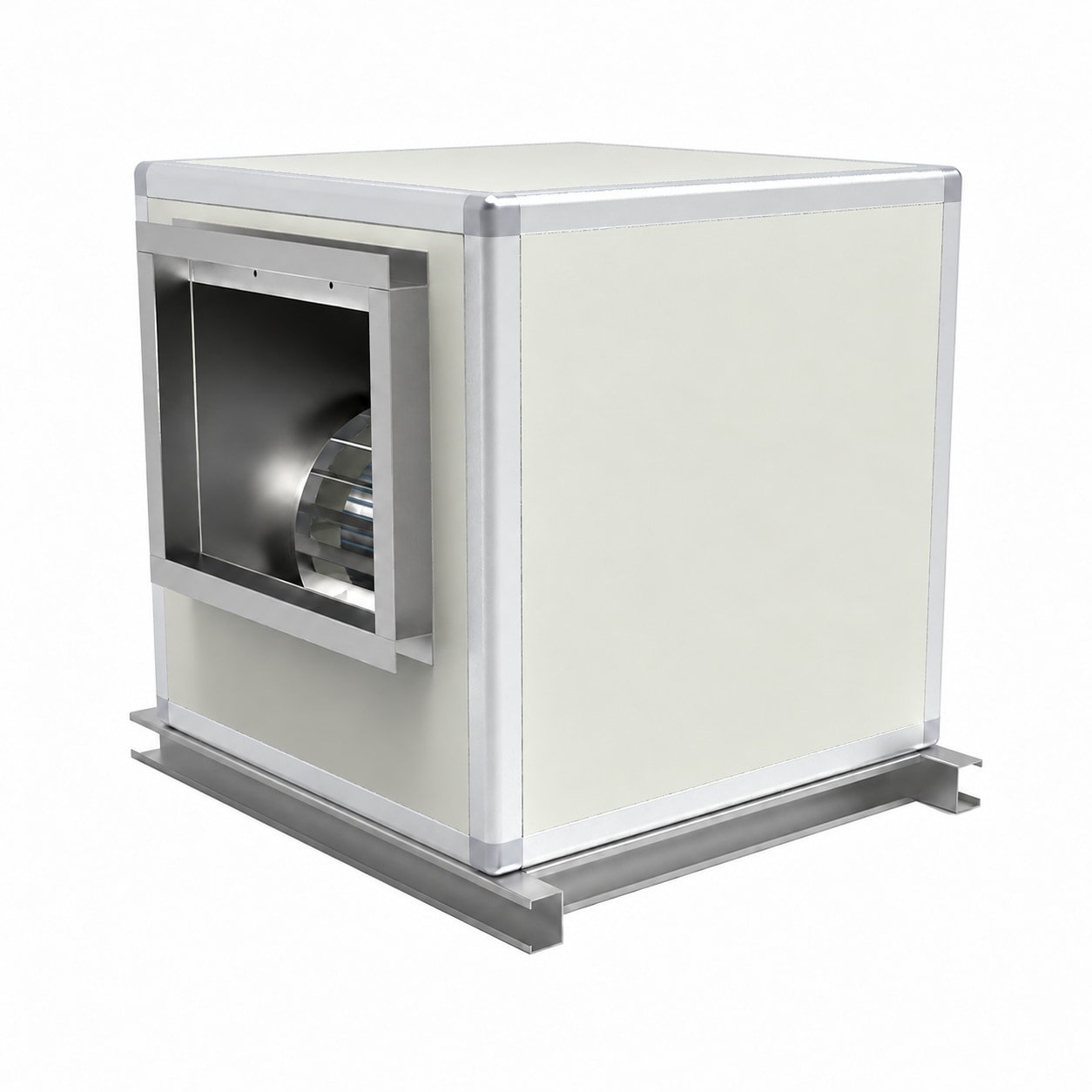
One fan type rarely suits every system in a commercial building. Toilet exhaust, plant rooms, corridors, general supply air, stair pressurisation and smoke control each have different pressure, sound, control and compliance requirements.
The sensible approach is to define each system duty first, calculate the resistance, then choose equipment that fits the sound target, maintenance access and operating mode.
Separate the systems by purpose
General exhaust deals with indoor air quality. A plant room may be driven by heat rejection. Stair pressurisation depends on pressure and door-opening conditions. Smoke exhaust has a separate emergency sequence, power arrangement and temperature duty.
Similar airflow figures do not make those systems interchangeable.
Calculate external resistance
Ducts, fittings, dampers, louvres, filters, silencers and terminals all add pressure loss. A cramped fan inlet or a sharp turn close to the casing can also reduce installed performance. Include those system effects instead of relying on a vague “high static pressure” description.
Treat noise at the source
A “low-noise” product name does not guarantee a quiet room. Sound depends on the operating point, speed, duct velocity, structure and installation. Select a stable duty, then coordinate flexible connections, vibration isolation, silencers and equipment-room construction.
Leave room to maintain it
Filters, belts, bearings, dampers and motors need access. Ceiling-mounted fan cabinets require a service opening and a practical removal route. A VFD may reduce energy use, but minimum airflow, motor cooling and any smoke-control override still need to be defined.
Project data checklist
- System purpose and operating modes
- Airflow, external static pressure and control range
- Sound target and measurement location
- Electrical supply, VFD and fire-system interface
- Orientation, size and service access
- Required fire, material and test documentation
Related products: DBF Fan Cabinet and HTFC Fan Cabinet.
Need help matching the fan?
Share airflow, pressure, medium, temperature and installation conditions for the next technical step.
Send an enquiry