
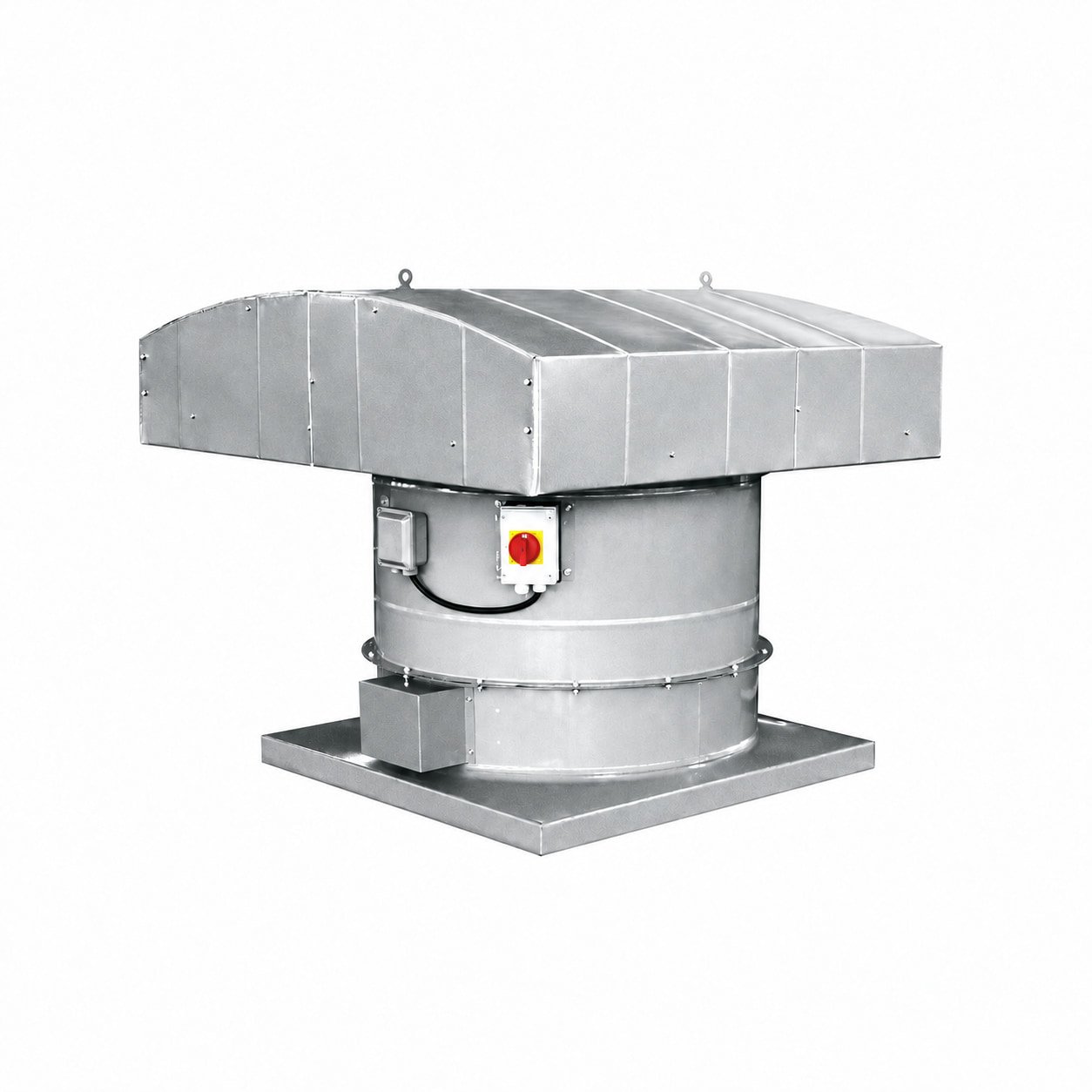
A roof fan should be selected around the heat or contaminant load, building height, make-up air path and system resistance. Floor area and air changes per hour are useful starting points, but they do not finish the job.
The roof curb, weather exposure, structural load, vibration, noise and safe maintenance access also belong in the selection. If the fan has a smoke-control duty, review that duty separately from everyday ventilation.
Define the ventilation target
Is the fan removing general heat, odour, process fumes or smoke? A volume-based air-change estimate may suit early planning, but concentrated heat or emissions call for a more specific calculation. High-bay buildings may also develop temperature stratification that a simple room-volume figure does not describe.
Provide enough make-up air
Every cubic metre exhausted must enter the building somewhere. Undersized louvres or supply fans increase negative pressure and pull the roof fan away from its rated volume. Excessive negative pressure can also make doors hard to open or upset combustion and process equipment.
Place make-up air inlets so fresh air crosses the occupied or process zone instead of travelling straight to the roof outlet.
Coordinate the roof opening
Confirm the roof construction, opening, curb height, flashing, drainage and structural load. Include the resistance of backdraft dampers, guards, silencers and weather components in the pressure calculation.
A weather hood reduces rain ingress; it does not solve every wind-driven-rain condition. Local wind, curb height, shutdown conditions and drainage details still matter.
Keep normal ventilation and smoke duty separate
A product name containing “smoke exhaust” does not prove compliance with a particular project. Fire duty needs an explicit temperature-time rating, control sequence, power arrangement and acceptable evidence.
Information to provide
- Building dimensions, clear height and ventilation objective
- Heat or contaminant source data
- Exhaust volume, pressure and make-up air method
- Roof opening, curb and waterproofing details
- Outdoor wind, rain, temperature and corrosion conditions
- Dampers, guards, vibration isolation and maintenance access
- Any smoke-control or hazardous-area requirement
Related products: JSF-RE Roof Exhaust Fan and DWT Roof Fan.
Need help matching the fan?
Share airflow, pressure, medium, temperature and installation conditions for the next technical step.
Send an enquiry